I.
Data quality.
Data quality. Automated assessment of completeness, outliers, and consistency in HMIS data– with adjustments so trends reflect service delivery, not reporting artefacts.

Collaborative data analysis for health systems.
Helping Ministries of Health strengthen primary health care and improve RMNCAH-N outcomes through rapid-cycle analysis and use of data.
An initiative of the Global Financing Facility (GFF)
At the heart of the platform is the FASTR analytical methodology – rigorous analysis of routine health data and health facility phone surveys, developed by the Global Financing Facility with country partners and applied with Ministries of Health in more than 25 countries. Analysis that once required specialist analysts and weeks of work.
The FASTR Analytics Platform makes those analyses something a ministry team runs themselves. Import routine HMIS or health facility phone survey data, and the analyses run in minutes– producing results the team can explore, interrogate, and take straight to decision-makers.
Data quality. Automated assessment of completeness, outliers, and consistency in HMIS data– with adjustments so trends reflect service delivery, not reporting artefacts.
Monthly trends in priority RMNCAH-N services from routine HMIS data, including disruption analysis that compares observed volumes against expected.
Coverage estimates from routine data and population denominators, tracked against country-specific targets and benchmarks.
Results from rapid-cycle health facility phone surveys measuring service availability and service readiness with data collected quarterly.
Each analysis runs as a module: versioned, reproducible statistical code implementing the published FASTR methodology. Import new data and every result refreshes automatically – no programming required.
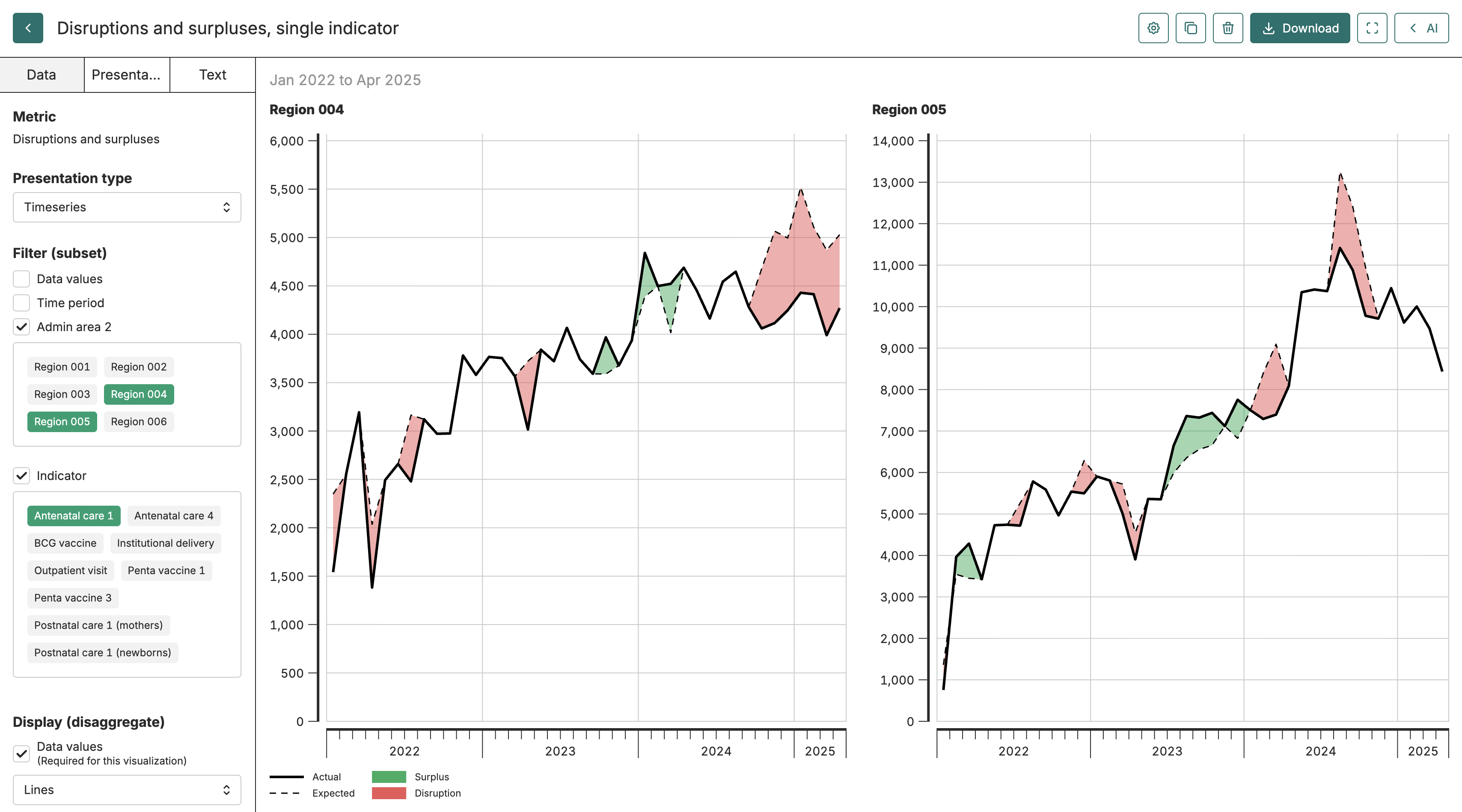
Every metric the analyses produce can be explored as charts, maps, and tables – filtered, disaggregated, and exported.
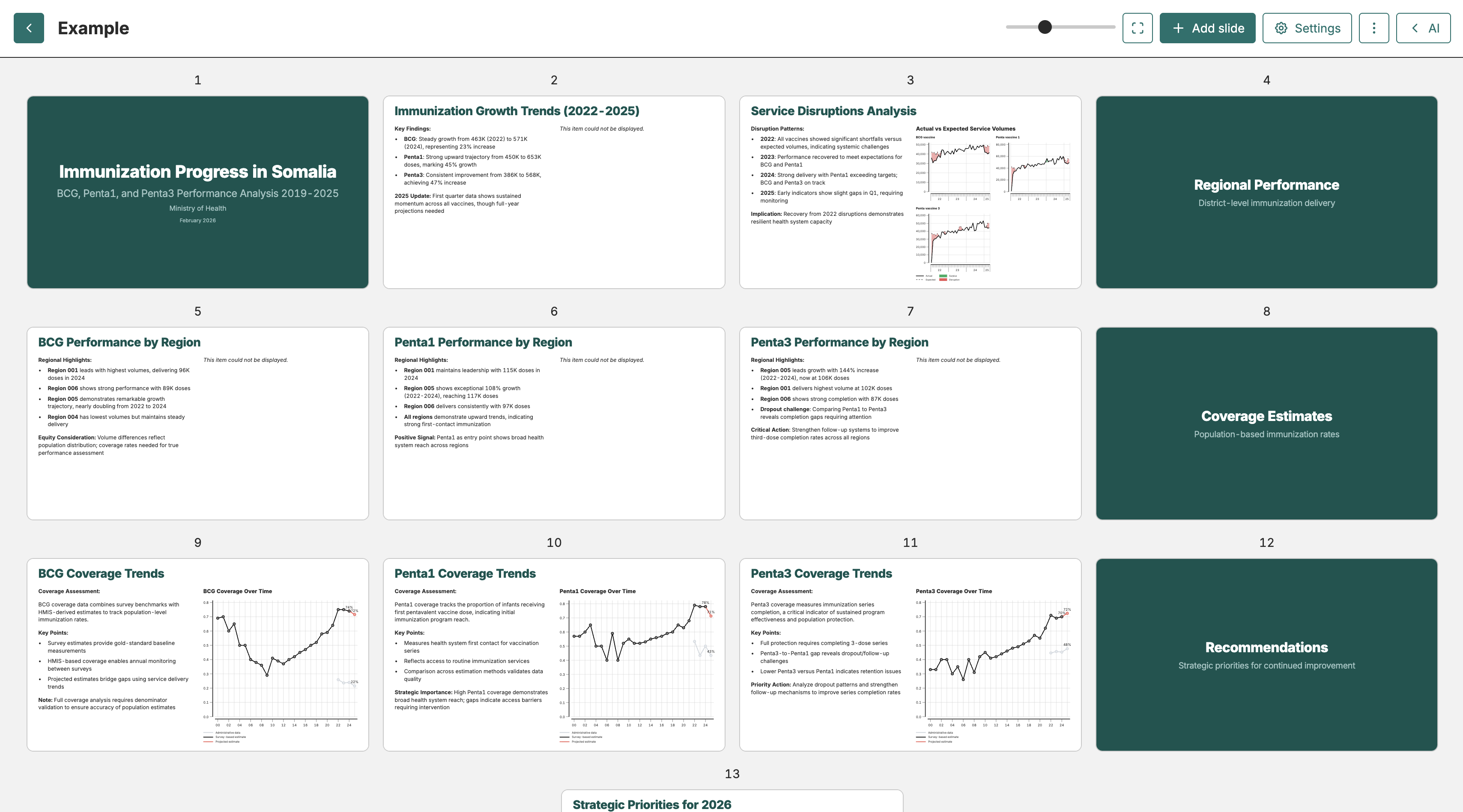
Assemble analysis results into presentation-ready decks with live figures – when the data updates, the deck updates.

Long-form analytical reports with embedded live figures, ready to export and circulate.
Plus live dashboards and an AI assistant that helps interpret results and draft narrative – the full path from raw data to ministerial briefing, inside one platform.
The FASTR methodology documentation walks through the full process: identifying questions and indicators, extracting and preparing data, assessing data quality, estimating coverage, and communicating results. The same methods run inside the platform's modules – every result is traceable to a documented, peer-reviewable method.
Read the methodology →The documentation walks through everything – setting up an instance, running the analyses, and sharing results.
Read the documentation →