
FASTR RMNCAH-N service use monitoring: Methodology documentation
Introduction to FASTR
Section titled “Introduction to FASTR”The Global Financing Facility (GFF) supports country-led efforts to improve the timely generation and use of data for decision-making, ultimately leading to stronger primary healthcare (PHC) systems and better reproductive, maternal, newborn, child, and adolescent health and nutrition (RMNCAH-N) outcomes. This set of initiatives and technical support is referred to as Frequent Assessments and System Tools for Resilience (FASTR).
FASTR encompasses four technical approaches: (1) RMNCAH-N service use monitoring using routine health management information system (HMIS) data, (2) rapid-cycle health facility phone surveys, (3) high-frequency household phone surveys, and (4) follow-on analyses. This methodology documentation focuses specifically on the first approach: RMNCAH-N service use monitoring.
RMNCAH-N service use monitoring
Section titled “RMNCAH-N service use monitoring”The GFF collaborates with Ministries of Health to conduct rapid-cycle analyses of routine HMIS data. This approach addresses three core objectives:
- Assess data quality at national and sub-national levels to identify and address completeness, accuracy, and consistency issues
- Track service utilization changes by measuring monthly shifts in priority RMNCAH-N health service volumes
- Monitor coverage progress by comparing service delivery trends against country-specific targets and benchmarks
These analyses focus on priority indicators tied to national health reforms and World Bank investments, with findings informing country planning processes and project implementation cycles. During the COVID-19 pandemic, the GFF supported Ministries of Health in over 20 countries to monitor the impact of the pandemic on essential health services using this approach.
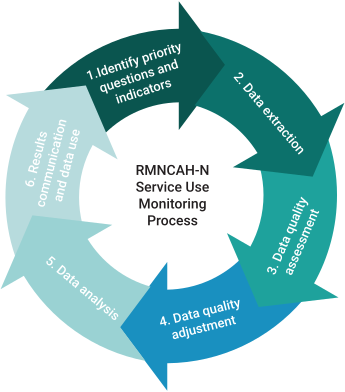
Figure 1. Steps to implement RMNCAH-N service use monitoring
Why rapid-cycle analytics?
Section titled “Why rapid-cycle analytics?”Existing health systems data sources are critical but often come with challenges that limit their use. HMIS data may not be analyzed promptly or may be perceived as too low-quality to use for decision making. Traditional in-person household and facility-based surveys demand extensive resources and time, with long lags between survey design, data collection, and the availability of findings. This prevents decision-makers from using data to drive meaningful improvements in health outcomes. To fill this gap, the GFF supports countries to develop and use rapid-cycle analytic approaches.
How does it work?
Section titled “How does it work?”Rapid-cycle analytic approaches provide timely, rigorous, and high-priority data that respond to each country’s specific priorities and data use needs. This continuous cycle of analyze-learn-strengthen-act seeks to improve the systematic use of data for decision-making towards improved RMNCAH-N outcomes.
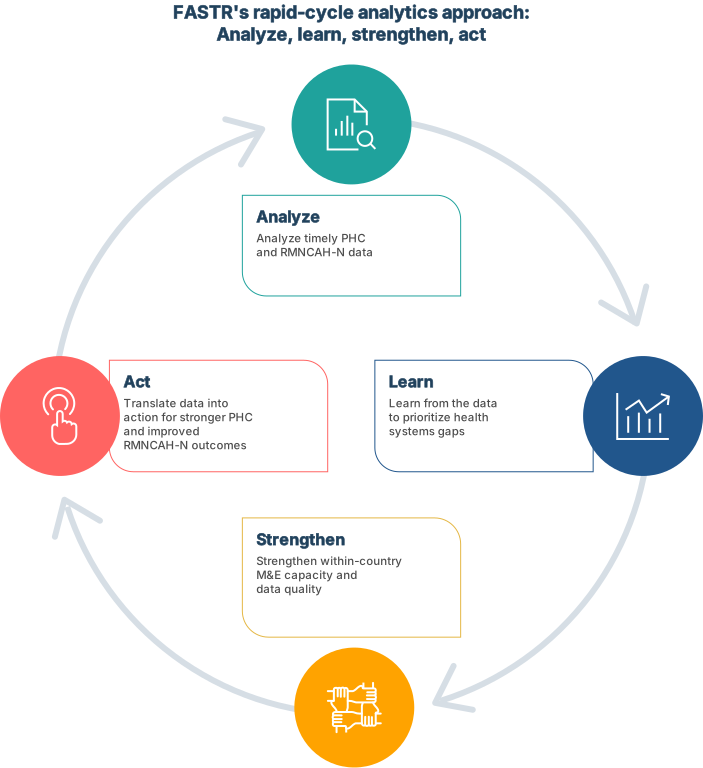
Figure 2. FASTR’s rapid-cycle analytics approach: Analyze, learn, strengthen, act
Technical approaches
Section titled “Technical approaches”FASTR’s four technical approaches, underpinned by capacity strengthening and data use support, enable countries to use rapid-cycle analytics for strengthening PHC systems and improving RMNCAH-N outcomes through the timely and high-frequency analysis and use of data.
-
Analysis of routine HMIS data assesses data quality, quantifies changes in priority health service volumes, and compares trends in service coverage to country targets for priority RMNCAH-N indicators.
-
Rapid-cycle health facility phone surveys assess the performance of PHC facilities, monitor the implementation of reforms, identify the impact of shocks, and track changes over time. The phone survey is administered to a representative panel sample of PHCs over four quarterly contacts a year.
-
High-frequency household phone surveys provide a snapshot of care seeking behavior, foregone care, financial protection, service coverage, and patient experience of care. Household surveys are currently done in partnership with the World Bank’s Living Standards Measurement Study.
-
Follow-on analyses employ root cause analysis and implementation research approaches to provide deeper understanding of issues uncovered by rapid-cycle analytics (e.g., explaining district-level performance variation, contextualizing the impact of health systems reforms, or investigating underlying causes of data quality issues and service delivery disruptions).
Illustrative capacity-building activities include support to automate the extraction, cleaning, and analysis of routine data and support to institutionalize rapid phone survey data collection and analysis approaches. Data use support prioritizes the integration of rapid-cycle analytics into existing data review and feedback mechanisms at national and subnational levels to strengthen the systematic use of data for decision making.
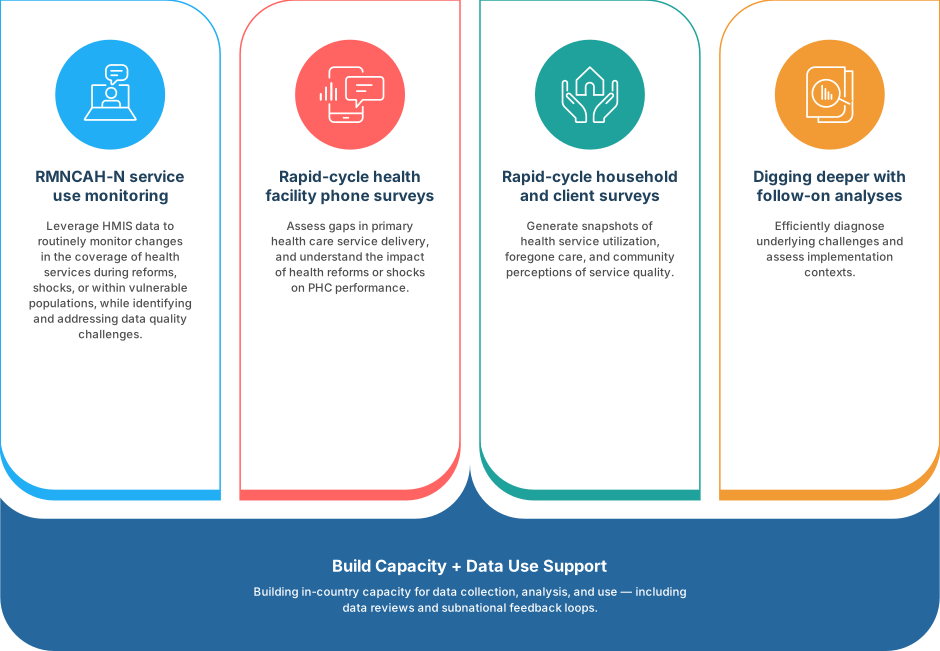
Figure 3. Rapid-cycle analytics under the Frequent Assessments and System Tools for Resilience (FASTR) initiative
How do countries use FASTR?
Section titled “How do countries use FASTR?”FASTR is designed to support country-defined policy questions using routine and survey data. Different countries enter FASTR through different pathways depending on their priorities. Some countries — such as Sierra Leone, Burkina Faso, Zambia, and Liberia — began with service continuity monitoring, triggered by changes in external financing for the health sector. Others — such as Nigeria, Ghana, and DRC — initiated FASTR to answer different priority questions, with disruption analysis as complementary work.
Regardless of the entry point, FASTR enables countries to monitor service continuity and recovery, identify geographic or service-specific challenges, and inform prioritization, planning, and policy dialogue.
From analysis to action
Section titled “From analysis to action”FASTR outputs — whether DQA scores, service use trends, or coverage estimates — are starting points, not endpoints. Each output triggers a cycle of investigation and action: findings raise questions, questions prompt investigation, investigation yields context, and context informs decisions. FASTR provides the evidence; stakeholders provide the context, judgement, and action.
Acronyms and abbreviations
Section titled “Acronyms and abbreviations”| Acronym | Definition |
|---|---|
| Programs & organizations | |
| DHS | The Demographic and Health Surveys (DHS) Program |
| FASTR | Frequent Assessments and System Tools for Resilience |
| GFF | Global Financing Facility |
| MICS | Multiple Indicator Cluster Surveys |
| MoH | Ministry of Health |
| UN | United Nations |
| Data systems & sources | |
| DHIS2 | DHIS2 (also spelled DHIS 2, formerly District Health Information Software) |
| HMIS | Health Management Information System |
| WPP | World Population Prospects |
| Health indicators & services | |
| ANC | Antenatal Care |
| BCG | Bacillus Calmette-Guérin (tuberculosis vaccine) |
| MCV | Measles-Containing Vaccine |
| OPD | Outpatient Department |
| Penta | Pentavalent vaccine (diphtheria, tetanus, pertussis, hepatitis B, Haemophilus influenzae type b) |
| PHC | Primary Healthcare |
| RMNCAH-N | Reproductive, Maternal, Newborn, Child, and Adolescent Health and Nutrition |
| SBA | Skilled Birth Attendant |
| Technical & statistical terms | |
| DQA | Data Quality Assessment |
| MAD | Median Absolute Deviation |
| Geographic | |
| LMIC | Low- and Middle-Income Country |
| SSA | Sub-Saharan Africa |
Use of routine health management information system data in LMICs
Section titled “Use of routine health management information system data in LMICs”Health-facility data collected through routine HMIS constitute a primary data source for assessing the performance of the health sector. HMIS data are widely used for a variety of purposes including health sector reviews, planning and resource allocation, program monitoring, health care quality improvement, and reporting purposes. Ministries of Health in low- and middle-income countries (LMICs) are striving to ensure equitable access to quality health services and care towards attaining universal health coverage and other national strategies. The efforts can be more successful if decision making at all levels of the sector are well informed by timely, reliable, and comprehensive data gathered through a well-established health information system. Sound decisions are based on sound data; therefore, it is essential to ensure that the data are of good quality.
Poor-quality data impact various levels of the health system in different ways. For program managers, inaccurate data can lead to poor decisions that harm the program’s operations and, ultimately, the population’s health. At the planning level, poor-quality data can distort evidence of progress towards health-sector goals and hinder annual planning processes by providing misleading results. Additionally, when determining investments in the health sector, poor-quality data can lead to poor targeting of resources. Despite HMIS data being crucial for robust health systems, studies in Sub-Saharan Africa (SSA) have reported challenges with data quality, including issues with completeness, timeliness, accuracy, and consistency (AbouZahr & Boerma, 2005; Mavimbe et al., 2005; Sychareun et al., 2014; Mutale et al., 2013; Amoakoh-Coleman et al., 2015; Gimbel et al., 2011; Teklegiorgis et al., 2016; Rowe, 2009; Belay & Lippeveld, 2013; Moukénet et al., 2021). These concerns about the quality of routine information have undermined its use in decision-making within the health sector (Mutale et al., 2013; Belay & Lippeveld, 2013; Xiao et al., 2017; O’Hagan et al., 2017; Chen et al., 2014; Glèlè Ahanhanzo et al., 2014; Bhattacharya et al., 2019; Nshimyiryo et al., 2020; Ouedraogo et al., 2019; Endriyas et al., 2019; Mwangu, 2005; Rowe et al., 2009). However, in recent years, countries have made substantial improvements in HMIS data quality which has been reinforced by a system of data quality assessment, data quality improvement, and data use for evidence-based decision making (Nisingizwe et al., 2014; Wagenaar et al., 2015; Mphatswe et al., 2012).
Defining data quality
Section titled “Defining data quality”Defining data quality is complex, and while there is no one single definition of data quality, there are four dimensions most frequently used to describe it: completeness, timeliness, consistency, and accuracy (World Health Organization, 2017).
Data quality dimensions and assessment
Section titled “Data quality dimensions and assessment”| Data quality domain | What does it measure? | How is it assessed? |
|---|---|---|
| Completeness | Are all data present? Is there sufficient information available to make decisions about the health of the population and to target resources to improve health-system coverage, efficiency and quality? | • Assessed by measuring whether all units that are supposed to report actually do (reporting completeness) • Assessed by measuring the completeness of indicator data (no missing values); this is different from overall reporting completeness in that it looks at completeness of specific data elements and not only at the receipt of the monthly reporting form (indicator completeness) |
| Timeliness | Are data regularly submitted on time? | • Assessed by measuring whether the units that submitted reports did so before a set deadline (timeliness) |
| Consistency | Are data plausible in view of what has been previously reported? | • Trends are evaluated to determine whether reported values are extreme relative to other values reported during the year or across several years (presence of outliers) • Assess trends in program indicators to determine whether reported values are extreme in relation to other values that are reported during the year or over several years (consistency over time) • Assess program indicators which have a predictable relationship to determine whether the expected relationship exists between those 2 indicators (consistency between related indicators) • Assess the level of agreement between two sources of data measuring the same health indicator; the two sources of data that are usually compared are data flowing through the HMIS and data from a periodic population-based survey (external comparison with other data sources) • Determine the adequacy of the population data used in evaluating the performance of health indicators by comparing two different sources of related population estimates for congruence (consistency of population data) |
| Accuracy | Do data faithfully reflect the actual level of service delivery conducted in the health facility? | • Assess the accuracy for selected indicators through the review of source documents in health facilities and comparison to monthly reports and HMIS values (consistency of reported data and original records, data verification factor) |
FASTR approach to routine data analysis
Section titled “FASTR approach to routine data analysis”The FASTR approach to routine data analysis takes a three-pronged approach:
- Identify issues in data quality
- Adjust for issues with data quality to improve analysis accuracy
- Analyze data to answer pressing country-specific policy questions including identifying changes in priority service volumes and trends in service coverage as compared to country priorities and targets
This approach enables identification of the highest priority data quality issues and subsequent necessary analytical adjustments so that data can be continually improved while appropriate analyses are conducted. Data quality assessment is conducted by indicator and can be disaggregated at sub-national level given facility-level data is used for the analysis. This is important to generate policy relevant regular reporting on data quality, service volume, and coverage estimates which provides a continual snapshot of RMNCAH-N service use.
Focus on a set of core indicators
Section titled “Focus on a set of core indicators”The FASTR approach to routine data analysis focuses on a core set of RMNCAH-N indicators that characterize the reproductive, maternal and child healthcare continuum, priority health areas across LMICs. These indicators capture key service delivery events, which have higher completeness rates and higher volume. In addition, these indicators serve as proxies for other services and interventions delivered at the same service contact. In addition, outpatient consultations (OPDs) are used as a proxy for the general use of health services. Additional, country and program-specific indicators can be added to the analysis to be responsive to country priorities.
Focus on a set of core data quality metrics
Section titled “Focus on a set of core data quality metrics”The FASTR approach to routine data analysis focuses on a core set of data quality metrics which enables identification of the highest priority data quality issues for which data quality adjustments can be made. In addition to the core data quality measures, the FASTR approach generates an overall data quality score which combines the core metrics into a single summary measure.
Results communication and data use
Section titled “Results communication and data use”During the COVID-19 pandemic, the GFF supported Ministries of Health in over 20 countries to monitor the impact of the pandemic on essential health services.
- Report: COVID-19: Impact on Essential Health Services
- Article: Healthcare utilization and maternal and child mortality during the COVID-19 pandemic in 18 low- and middle-income countries
- Article: Vaccination utilization and subnational inequities during the COVID-19 pandemic
- Article: Disruptions in maternal and child health service utilization during COVID-19: analysis from eight sub-Saharan African countries
More results and reports can be found in the FASTR Resource Repository.
What this documentation covers
Section titled “What this documentation covers”This methodology documentation describes the complete FASTR approach to routine HMIS data analysis, from initial planning through results communication.
Planning & preparation
Section titled “Planning & preparation”- Identify questions & indicators - Defining priority questions and selecting core indicators for FASTR implementation
- Data extraction - Extracting and preparing HMIS data from DHIS2 for analysis
- The FASTR data analytics platform - Using the platform for automated analysis and visualization
Analytics modules (FASTR platform)
Section titled “Analytics modules (FASTR platform)”The FASTR analytics platform includes five automated modules:
- Data quality assessment - Module 1 in the platform. Assessment of HMIS data quality through completeness, outlier detection, and consistency metrics
- Data quality adjustment - Module 2 in the platform. Techniques for improving data accuracy by adjusting for outliers and incomplete reporting
- Service utilization analysis - Module 3 in the platform. Analysis of health service usage patterns to detect and quantify disruptions
- Coverage estimates - Modules 5 & 6 in the platform (Part 1: denominator calculation, Part 2: coverage estimation). Methods for estimating service coverage and comparing trends to country targets
Contact: fastr@worldbank.org
References
Section titled “References”- AbouZahr, C., & Boerma, T. (2005). Health information systems: the foundations of public health. Bulletin of the World Health Organization, 83(8), 578–583.
- Amoakoh-Coleman, M., et al. (2015). Completeness and accuracy of data transfer of routine maternal health services data in the greater Accra region. BMC Research Notes, 8, 114. doi:10.1186/s13104-015-1058-3
- Belay, H., & Lippeveld, T. (2013). Inventory of PRISM framework and tools: application of PRISM tools and interventions for strengthening routine health information system performance. MEASURE Evaluation, Carolina Population Center, Chapel Hill, NC. https://www.measureevaluation.org/resources/publications/wp-13-138/at_download/document
- Bhattacharya, A. A., et al. (2019). Quality of routine facility data for monitoring priority maternal and newborn indicators in DHIS2: A case study from Gombe State, Nigeria. PLoS ONE, 14(1), e0211265. doi:10.1371/journal.pone.0211265
- Chen, H., Hailey, D., Wang, N., & Yu, P. (2014). A review of data quality assessment methods for public health information systems. International Journal of Environmental Research and Public Health, 11(5), 5170–5207. doi:10.3390/ijerph110505170
- Endriyas, M., et al. (2019). Understanding performance data: health management information system data accuracy in Southern Nations Nationalities and People’s Region, Ethiopia. BMC Health Services Research, 19, 1–6. doi:10.1186/s12913-019-3991-7
- Gimbel, S., et al. (2011). An assessment of routine primary care health information system data quality in Sofala Province, Mozambique. Population Health Metrics, 9, 12. doi:10.1186/1478-7954-9-12
- Glèlè Ahanhanzo, Y., Ouedraogo, L. T., Kpozèhouen, A., Coppieters, Y., Makoutodé, M., & Wilmet-Dramaix, M. (2014). Factors associated with data quality in the routine health information system of Benin. Archives of Public Health, 72(1), 25. doi:10.1186/2049-3258-72-25
- Mavimbe, J. C., Braa, J., & Bjune, G. (2005). Assessing immunization data quality from routine reports in Mozambique. BMC Public Health, 5, 108. doi:10.1186/1471-2458-5-108
- Moukénet, A., et al. (2021). Health management information system (HMIS) data quality and associated factors in Massaguet district, Chad. BMC Medical Informatics and Decision Making, 21(1), 326. doi:10.1186/s12911-021-01684-7
- Mphatswe, W., et al. (2012). Improving public health information: a data quality intervention in KwaZulu-Natal, South Africa. Bulletin of the World Health Organization, 90(3), 176–182. doi:10.2471/blt.11.092759
- Mutale, W., et al. (2013). Improving health information systems for decision making across five sub-Saharan African countries: Implementation strategies from the African Health Initiative. BMC Health Services Research, 13(2), S9. doi:10.1186/1472-6963-13-S2-S9
- Mwangu, M. (2005). Quality of a routine data collection system for health: case of Kinondoni district in the Dar es Salaam region, Tanzania. South African Journal of Information Management, 7(2).
- Nisingizwe, M. P., et al. (2014). Toward utilization of data for program management and evaluation: quality assessment of five years of health management information system data in Rwanda. Global Health Action, 7(1), 25829. doi:10.3402/gha.v7.25829
- Nshimyiryo, A., et al. (2020). Health management information system (HMIS) data verification: a case study in four districts in Rwanda. PLoS ONE, 15(7), e0235823. doi:10.1371/journal.pone.0235823
- O’Hagan, R., et al. (2017). National assessment of data quality and associated systems-level factors in Malawi. Global Health Science and Practice, 5(3), 367–381. doi:10.9745/GHSP-D-17-00177
- Ouedraogo, M., et al. (2019). A quality assessment of Health Management Information System (HMIS) data for maternal and child health in Jimma Zone, Ethiopia. PLoS ONE, 14(3), e0213600. doi:10.1371/journal.pone.0213600
- Rowe, A. K. (2009). Potential of integrated continuous surveys and quality management to support monitoring, evaluation, and the scale-up of health interventions in developing countries. American Journal of Tropical Medicine and Hygiene, 80(6), 971. doi:10.4269/ajtmh.2009.80.971
- Rowe, A. K., Kachur, S. P., Yoon, S. S., Lynch, M., Slutsker, L., & Steketee, R. W. (2009). Caution is required when using health facility-based data to evaluate the health impact of malaria control efforts in Africa. Malaria Journal, 8(1), 209. doi:10.1186/1475-2875-8-209
- Sychareun, V., Hansana, V., Phengsavanh, A., Chaleunvong, K., Eunyoung, K., & Durham, J. (2014). Data verification at health centers and district health offices in Xiengkhouang and Houaphanh Provinces, Lao PDR. BMC Health Services Research, 14, 255. doi:10.1186/1472-6963-14-255
- Teklegiorgis, K., Tadesse, K., Terefe, W., & Mirutse, G. (2016). Level of data quality from Health Management Information Systems in a resources limited setting and its associated factors, eastern Ethiopia. South African Journal of Information Management, 18(1), 1–8. doi:10.4102/sajim.v18i1.612
- Wagenaar, B. H., Sherr, K., Fernandes, Q., & Wagenaar, A. C. (2015). Using routine health information systems for well-designed health evaluations in low- and middle-income countries. Health Policy and Planning, czv029. doi:10.1093/heapol/czv029
- World Health Organization (2017). Data quality assurance: a toolkit for facility data quality assessment: module 1: framework and metrics. World Health Organization, Geneva, Switzerland. https://iris.who.int/bitstream/handle/10665/366086/9789240047358-eng.pdf?sequence=1
- Xiao, Y., et al. (2017). Challenges in data quality: the influence of data quality assessments on data availability and completeness in a voluntary medical male circumcision programme in Zimbabwe. BMJ Open, 7(1), e013562.